Halal Tourism in Vietnam 2026: How Vietnam Is Welcoming Muslim Travellers
 By Jimmy Nguyen, Founder & Director of Asia Travel Expert Co., Ltd.
Is Vietnam becoming a Muslim-friendly destination? Steadily, yes. Vietnam welcomed a record 21.2 million international visitors in 2025, and the government, airports, hotels and tour operators are investing in halal food, prayer facilities and certification to win a bigger share of the fast-growing Muslim travel market. Vietnam climbed to 60th of 150 destinations in the 2026 Mastercard-CrescentRating Global Muslim Travel Index, up from 66th in 2025. This article explains what has changed, what still needs work, and what it means if you are planning a trip.
Halal Tourism in Vietnam: Key Facts for 2026
| Indicator | Latest figure |
|---|---|
| International arrivals (2025) | 21.2 million, a record (+20.4% year on year) |
| Global Muslim Travel Index 2026 | Vietnam 60th of 150 (24th among non-OIC destinations), score 46/100 |
| Strongest GMTI pillar | Environment (safety, visitor arrivals): 68/100 |
| Weakest GMTI pillars | Services (halal food, prayer facilities): 30/100; Communication: 33/100 |
| Visitors from Muslim-majority countries to Hanoi (2024) | About 650,000, roughly 15% of Hanoi’s international arrivals |
| National halal certification body | HALCERT, established in 2024 under the Ministry of Science and Technology |
| National halal standard | TCVN 13888:2023 |
Why Vietnam Wants Muslim Travellers
Muslim travellers are one of the world’s fastest-growing travel segments, and they tend to travel in families, stay longer and spend more on hotels and private tours. Vietnam’s tourism authorities have repeatedly pointed to the Gulf states, Malaysia, Indonesia and South Asia as priority markets, and direct flights and simple e-visa rules make the country easier to reach than a decade ago. For a country that already attracts visitors with Halong Bay, Hoi An and its food culture, the missing pieces were halal food, prayer space and trusted certification.
What Has Changed: Certification, Airports and Hotels
A national halal certification system
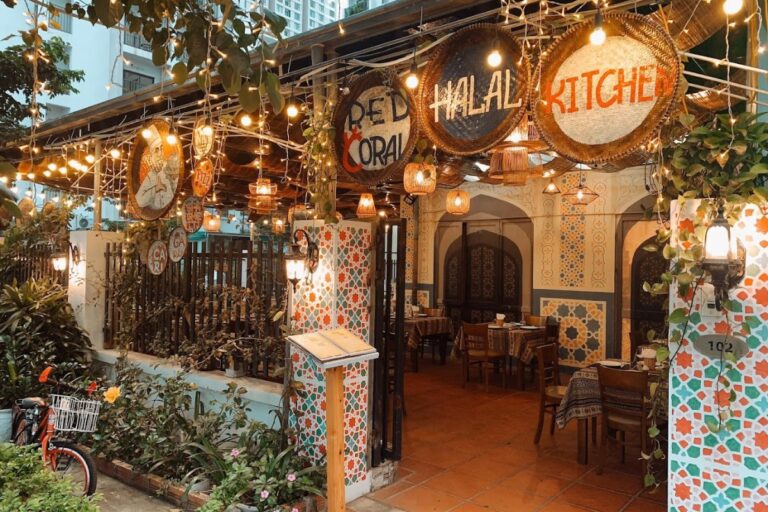
In 2024 Vietnam launched the Vietnam Halal Certification Authority (HALCERT) and applies the national halal standard TCVN 13888:2023. The Prime Minister also endorsed a project to expand international cooperation on the halal industry to 2030. Most certificates so far cover food exporters, but restaurants are starting to follow: in Ha Long, for example, the Nan n Kabab branch received a HALCERT certificate in 2025.
Prayer rooms at major airports
Noi Bai International Airport in Hanoi has a dedicated prayer room near gate 37 in Terminal 2, with separate areas for men and women, and Tan Son Nhat in Ho Chi Minh City offers a halal lounge in its international terminal. A few years ago, Muslim passengers had almost nowhere to pray airside.
Hotels and restaurants
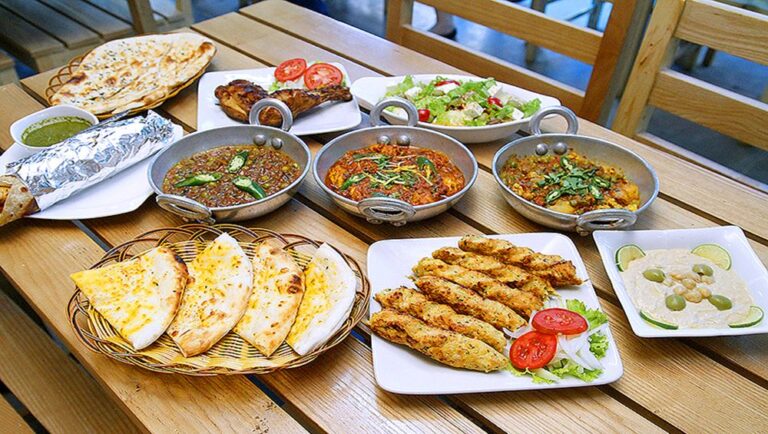
In Hanoi, the tourism department has highlighted Meliá Hanoi and InterContinental Hanoi Landmark72 for meeting halal standards, and many international hotels now prepare halal meals on request. The number of Muslim-run restaurants has grown fastest in the places Muslim visitors actually go: Hanoi’s Old Quarter, Sapa and Bai Chay in Ha Long, Da Nang and Ho Chi Minh City.
Halal cruises and tours
On Halong Bay, Mon Chéri Cruises runs a dedicated halal kitchen, and specialist operators such as Hanoi Muslim Tours design itineraries around halal meals. Hanoi’s 2025 Tourism Festival also featured halal food from India, Malaysia, Iran and Palestine.
What Still Needs Work
- Halal food outside the big cities is scarce. Ninh Binh has only a few options, and there is none on Cat Ba Island.
- Mosques are concentrated in the south. In the north there is only the Al-Noor Mosque in Hanoi.
- Restaurant certification is still rare, so travellers must rely on Muslim ownership and local knowledge.
- Communication scores remain low in the GMTI: few Vietnamese tourism websites explain halal options clearly.
What It Means for Your Trip
Vietnam is now an easy destination for Muslim travellers who plan ahead. In practice:
- Base yourself near halal food: Hanoi’s Old Quarter, Bai Chay in Ha Long, Thac Bac Street in Sapa.
- Book a cruise with a genuine halal kitchen rather than a “no pork” menu.
- Pack a light prayer mat and use a qibla app for days outside the cities.
- Use our local guides: halal restaurants in Hanoi, Halong, Ninh Binh, Sapa and Muslim in Hanoi.
Want it organised for you? Our Vietnam Muslim tour packages include certified halal meals from Hanoi to Ho Chi Minh City. Contact Hanoi Muslim Tours for a free itinerary.
Frequently Asked Questions about Halal Tourism in Vietnam
1. Is Vietnam a Muslim-friendly country?
Increasingly so. Vietnam ranks 60th of 150 destinations in the 2026 Global Muslim Travel Index, with halal restaurants and prayer facilities in the main tourist cities, but options are limited in rural areas.
2. Does Vietnam have halal certification?
Yes. Vietnam’s national halal certification body, HALCERT, was established in 2024 and uses the national standard TCVN 13888:2023. Most certificates cover food producers, and a few restaurants are now certified.
3. Are there prayer rooms at Vietnamese airports?
Yes. Noi Bai (Hanoi) has a prayer room in Terminal 2 near gate 37, and Tan Son Nhat (Ho Chi Minh City) has a halal lounge in the international terminal.
4. Where are the mosques in Vietnam?
Most are in Ho Chi Minh City and the southern provinces of An Giang, Tay Ninh and Ninh Thuan. In the north, the only mosque is Al-Noor in Hanoi.
5. Which Vietnamese cities are easiest for halal food?
Hanoi, Ho Chi Minh City, Da Nang, Sapa and Bai Chay (Ha Long) have the widest choice of halal and Muslim-run restaurants.
6. How many international visitors did Vietnam receive in 2025?
A record 21.2 million, up 20.4% on 2024, according to official statistics.