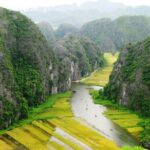
Lao Chai & Ta Van Villages: Sapa’s Classic Rice Terrace Trek (2026)
Is the Lao Chai – Ta Van trek worth it? Yes; it is the classic Sapa walk. The route follows the Muong Hoa Valley from Lao Chai, a Black H’mong village about 7–8 km from Sapa, down to Ta Van, a Giay village a few kilometres further on, through some of Vietnam’s most beautiful rice terraces. Most treks cover 10–12 km in 4–6 hours, with an ecotourism fee of about 75,000 VND per adult that includes the Sapa Ancient Carved Stones area.
Why Trek to Lao Chai and Ta Van
- Sweeping views of terraced rice fields in the Muong Hoa Valley.
- Two ethnic cultures in one walk: Black H’mong and Giay.
- The ancient carved stones, a national monument since 1994.
- Flexible: shorter routes and car pick-ups are possible.

Lao Chai & Ta Van at a Glance
| Location | Muong Hoa Valley, about 7–12 km from Sapa town |
| Ethnic groups | Black H’mong (Lao Chai), Giay (Ta Van), some Red Dao |
| Fee | About 75,000 VND per adult, 50,000 VND per child (includes the ancient stones area); check on site |
| Trek | 10–12 km, 4–6 hours at an easy pace; shorter options available |
| Best time | September (harvest) and April–June (water-filled terraces) |
| What to wear | Walking shoes with grip, rain jacket, modest light layers |
Highlights of the Trek
1. Lao Chai Village
Black H’mong houses scattered along the hillside, with terraces dropping to the Muong Hoa stream.
2. Muong Hoa Valley Rice Terraces
The terraces change colour through the year, from silver water in spring to green in summer and gold in September.
3. Ta Van Village
A larger Giay village with bamboo bridges and many homestays, the usual end point of the walk.
4. Sapa Ancient Carved Stones
About 200 boulders carved with mysterious patterns, studied since 1925 and protected as a national monument.
Tips for Muslim Travellers
- Ask your guide for a private car back to Sapa so you can pray and eat halal in town.
- Village food stalls and homestays cook with pork and lard; eat in Sapa town or bring halal snacks.
- Trails are muddy after rain; avoid long skirts that drag, and choose loose trousers.
- Sapa has several Muslim-run halal restaurants on Thac Bac Street, a short walk from the town centre, and some have a prayer room. See our guide to halal restaurants in Sapa.
- There is no mosque in Sapa or Lao Cai province; pray at your hotel or in a halal restaurant with a prayer room.
Plan Your Visit with Hanoi Muslim Tours
Every Hanoi Muslim Tours itinerary is private and planned around prayer times, with halal meals booked in advance and an English-speaking guide who knows which sights suit Muslim families. See our Sapa travel guide for Muslim travellers, browse Hanoi – Sapa Muslim Tour 3 Days, Hanoi Muslim Tour 7 Days, or Contact Hanoi Muslim Tours Team for a free custom itinerary.
Frequently Asked Questions about Lao Chai and Ta Van Villages
1. How long is the Lao Chai – Ta Van trek?
Usually 10–12 km, taking 4–6 hours at an easy pace.
2. Is the trek difficult?
It is moderate, with some slippery sections after rain; shorter routes are available.
3. Is there an entrance fee?
Yes, about 75,000 VND per adult, including the ancient carved stones area.
4. Who lives in Lao Chai and Ta Van?
Black H’mong in Lao Chai and Giay people in Ta Van.
5. When is the best time for the trek?
September for golden rice and April–June for water-filled terraces.
6. Can I stay overnight in Ta Van?
Yes, there are homestays, but kitchens use pork; most Muslim travellers prefer a hotel in Sapa.
7. Is there halal food on the trek?
No; bring halal snacks and eat lunch or dinner on Thac Bac Street in Sapa.
8. Do I need a guide?
A local guide is recommended for the best route and for safety.